0,00 €
Potrebbero interessarti anche
Acquista anche su


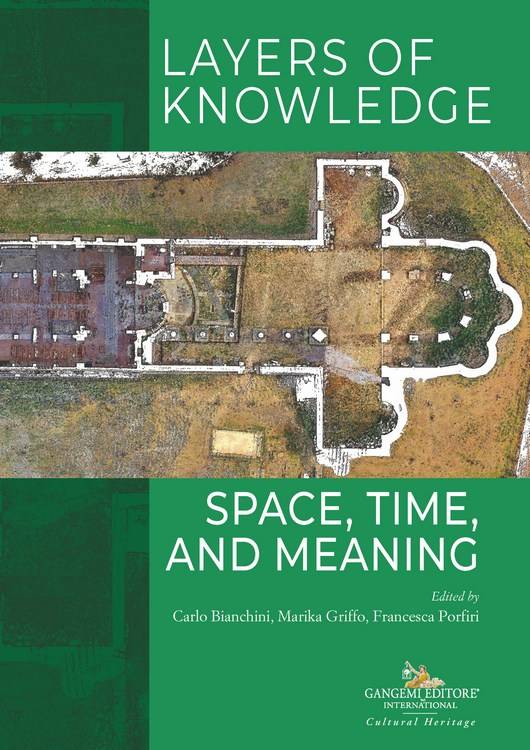
Layers of knowledge
Space, time, and meaning
Autori: Bianchini Carlo, Griffo Marika, Porfiri Francesca
Formato:
Legatura:
Pagine: 132
Anno edizione: 2026
ISBN: 9788849254723
EAN: 9788849254723
UB. INT. :
Contenuto
Volume della collana OPEN ACCESS scaricabile gratuitamente
The activities collected in this volume are developed within the framework of the research programme PNRRPE5 – CHANGES, Extended Partnership 5, and specifically within Spoke 8 – Sustainability and Resilience of Tangible Cultural Heritage, funded by the Italian National Recovery and Resilience Plan (PNRR). Spoke 8 addresses the challenges of Tangible Cultural Heritage (TCH) through an integrated research model that combines technological innovation, scientific methodologies, and humanistic approaches. Its main objectives include the development of digital infrastructures for inventories and cadastral systems to support multiple knowledge pathways and maximise accessibility; evidence-based evaluation workflows to identify the relevance, value, and cultural potential of sites, areas, and territories; and tailored strategies for inclusive and participatory management, fostering sustainability, resilience, and community engagement. Within this research framework, the Study Days, called Layers of Knowledge: Space, Time and Meaning, were held on 1–2 December in Venosa (PZ) at the museum venue of the Archaeological Park, marking the conclusion of a three-year research path. The initiative was synergistically organised by the Thematic Lines 1 and 2 and, while presenting their respective outcomes, it aimed at displaying their strong complementary perspectives.
According to this approach, the event brought together all the Spoke partners and the projects funded through the cascade calls, providing a comprehensive overview of the results achieved, the interactions among research strands, and future perspectives. The Study Days were structured into thematic sessions focused on the core methodological pillars of Spoke 8, including georeferencing strategies, the analysis of temporal stratification, and the semantic integration of heterogeneous data through advanced platforms for querying, interpretation, and dissemination.
Contributions from partners and cascade call projects demonstrated the richness and coherence of the research activities, highlighting how different lines of investigation operated within a shared conceptual and operational framework.
Two case studies were central to the event: the Complex of the Santissima Trinità in Venosa and the Cathedral of Acerenza. Exhibitions and guided visits at both sites enabled direct comparison of 3D documentation campaigns and architectural analyses conducted during the project, fostering dialogue with other research lines and providing historical and architectural perspectives that effectively integrated the digital tools and methodologies developed within Spoke 8.
The Study Days also represented an important dissemination opportunity, encouraging the sharing of results and dialogue among partners, researchers, professionals, and cascade call teams. The collaborative atmosphere and continuous interdisciplinary exchange confirmed the strength of the network established over the three years and its potential to generate new shared research trajectories. The initiative concluded the Spoke 8 research path with a positive assessment, highlighting both the quality of the results and the maturity of the collaborations.
This volume collects the pre-acts of the Venosa Study Days, reflecting the thematic organisation of the event and the structure of the research programme. Section I, dedicated to PNRR partner projects, is articulated into three parts: Archaeology and Historical Landscapes; Cultural Heritage, Communities and Value Creation; and Digital Methods and Information Systems for Heritage Knowledge. Section II presents the projects funded through cascade calls and focuses on Innovation, Governance and Intelligent Systems for Cultural Heritage, showcasing experimental approaches, applied research, and innovative models that expand the research framework of Spoke 8.
Taken together, the contributions in this volume demonstrate how archaeological and architectural studies, community engagement, governance models, and advanced digital methods converge into an integrated framework for the sustainable, resilient, and shared knowledge of tangible cultural heritage.
Il volume è pubblicato con licenza Creative Commons Attribuzione-Non commerciale-Non opere derivate 4.0 Internazionale (CC-BY-NC-ND 4.0).
Parole chiave
Condividi su
